

AI brand background Locomotive AI Logo

Your brand exists in micro-moments scattered across the web.

We use AI to turn them into one clear picture.

There are trillions of pages on the internet, and LLMs have read them all. We built a tool to turn each of those data points into a SWOT-like analysis that reveals your brand attributes, differentiators, and more.

Sign up for early access ⟶

Introducing Our AI Brand Perception Gap Analysis

When people search online, they don't just use basic queries like “cars” or even “the best cars.” They narrow down their searches by including modifiers, such as “most reliable” or “best for college students.” With every search, AI absorbs information and shapes its perception of brands. This tool shows your share of voice for each of those modifiers, giving you a better look at where your brand is winning (or losing) and why.

Example 1: The Traits That Define Your Brand

From "most powerful" to "safest," see which traits are tied to your brand and how you stack up to the competition.
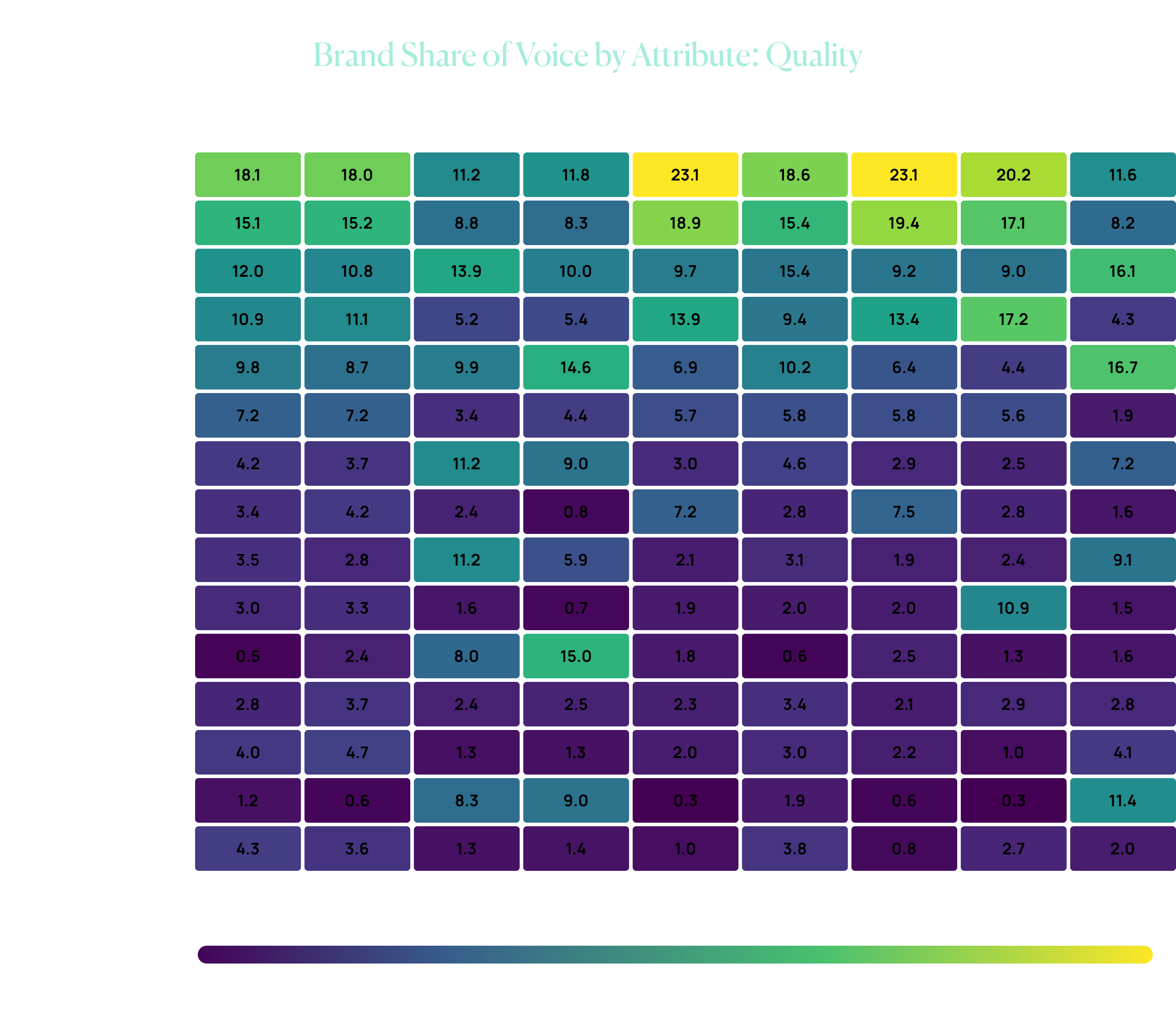
Brand Share of Voice by Modifier - quality
What You Can Learn

By breaking it down this way, you can discover how your core brand message is actually reflected online, which traits your brand owns, and which are owned by your competitors.

Is AI accurately reflecting your brand message?

Volvo built its reputation on safety, but it only ranks 4th for "safest" and barely registers for "most reliable" or "most dependable." This shows where Volvo needs to improve its messaging.

Where are you showing up but not winning?

Chevy is often in the conversation, but it's never the top choice. That mid-tier visibility means they're not owning key decision moments. With this info, they know where to focus their efforts.
Example 2: Where Your Brand Shows Up by Audience or Intent

See how your brand performs in searches specific to people, priorities, and real-life use cases.

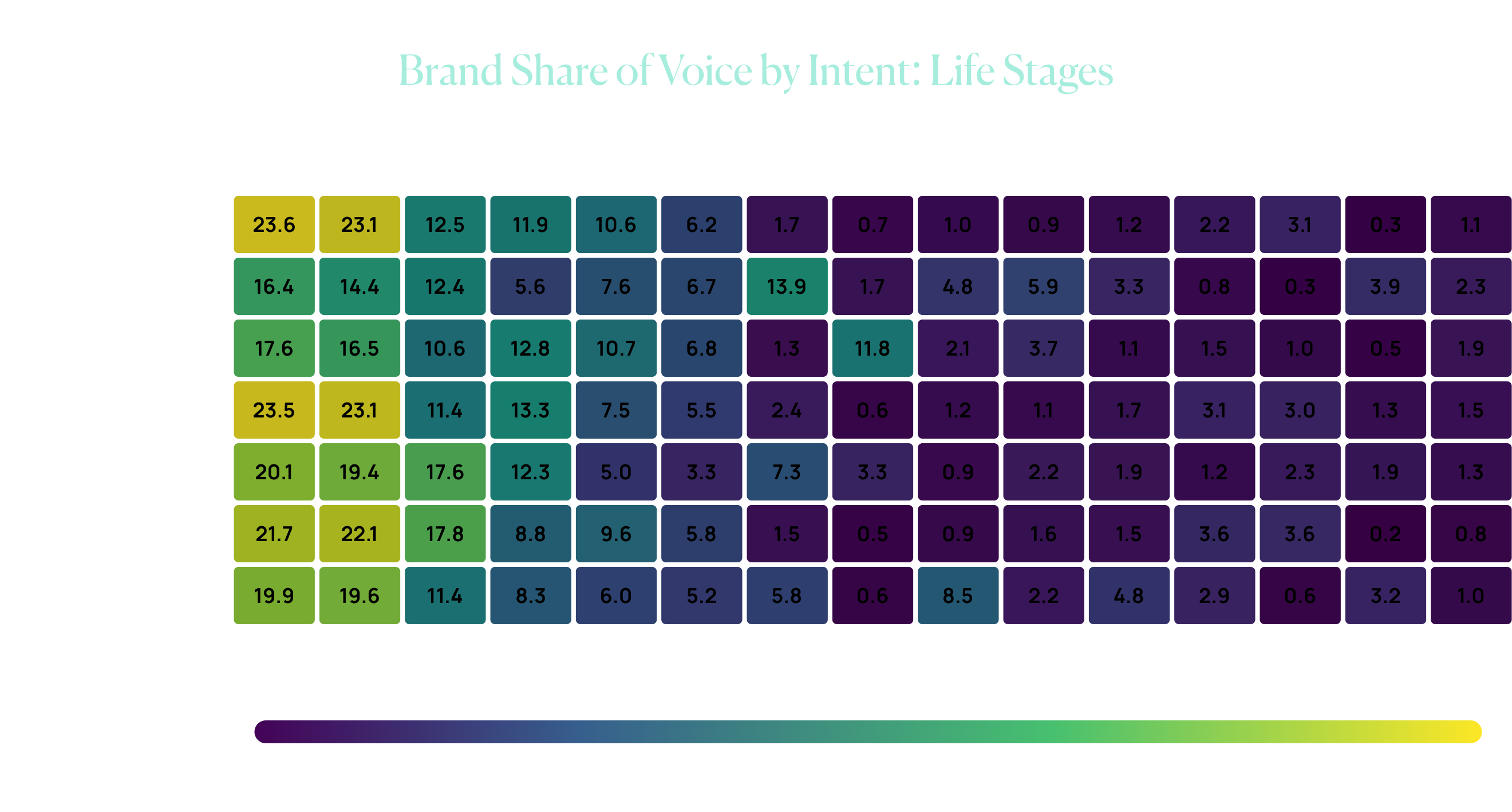
Brand SOV by Keyword - life stages
What You Can Learn

This gives you better insight into which audiences and intents are associated with your brand. It also shows the groups you're reaching that you may not have known about.

Are you winning or losing the next generation?

Subaru is a trusted brand when it truly matters. It ranks high for both "teen driver" and "senior citizen," showing rare cross-generational credibility. These are impactful targeting insights for Subaru.

Is your brand quietly winning any niches?

Lexus isn't winning on quality or younger personas, but it owns a 13.9% share for "empty nester car," just behind Toyota. It's quietly resonating with a valuable mid-life audience. They can turn that into a competitive advantage.

Example 3: The Intersection of Your Brand Traits and Buyers Needs

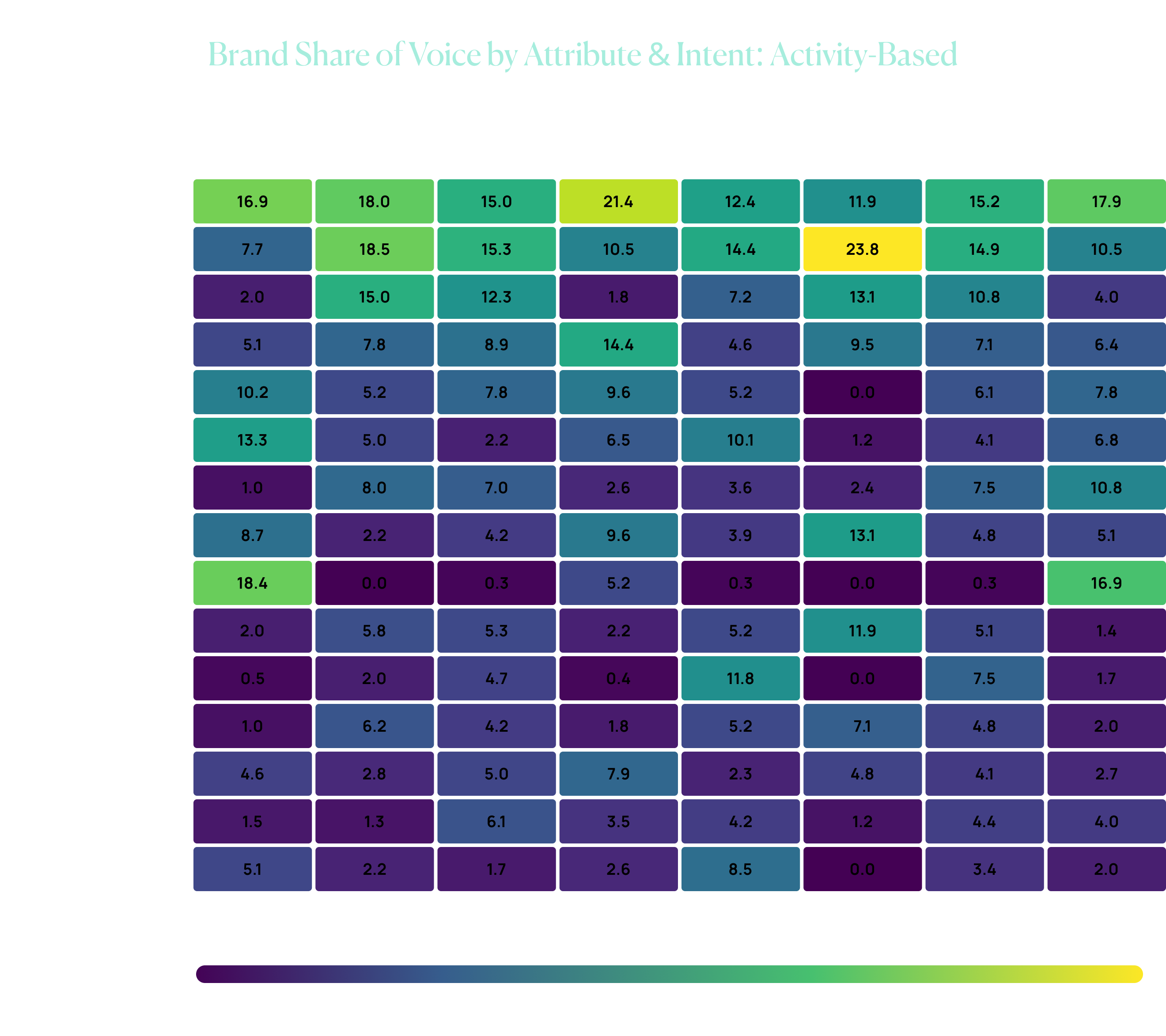
This view intersects brand perception (how you're described) with audience intent (who's searching and why), giving you a sharper picture of relevance.

Brand SOV by Keyword - life stages
What You Can Learn

By layering data sets, you can find out which brand-trait-use case combinations you are already winning, and where there's white space your brand can target.

Do your performance traits align with real-world needs?

Ford leads on both "most powerful" and "quietest," a surprising combo that challenges assumptions about what utility buyers really want. This offers a unique perspective at how their vehicles line up with real-world needs.

Do you know where you're trusted and how to build on it?

Toyota doesn't dominate flashier traits, but it is consistent. It's showing up as the go-to for comfort and reliability in real-life scenarios. This gives them a better look at where to focus their future marketing efforts.

Ready to see what the internet really thinks about your brand?

Sign up for early access and get your brand's first AI-powered perception analysis.